TopSearch Updated 18 October 2026 · Sufrin Studios · Toronto Get found

What Changed in Google and AI Search, and What We Did About It

Google, Bing, ChatGPT and Claude keep changing how people find websites. We read the companies, the reporters and the people who test, keep what holds up, and change our own sites first. Each finding says how well it is proven.

Findings

53 findings · 37 confirmed at the source

  • Official 37 The search engine or AI company says so in its own documentation
  • Tested 9 Published data or an experiment with a stated method
  • Reported 4 A reporter or practitioner says s
  • Opinion 3 A practitioner’s view with no data behind it

OfficialCrawlers18 Oct

OpenAI, Anthropic and Perplexity document their crawlers and robots.txt controls, and none says its bots read other sites' llms.txt.

The control AI companies actually honor is robots.txt, crawler by crawler. Decide on search crawlers and training crawlers separately.

ChatGPT-User and Perplexity-User may not follow robots.txt at all, since a person triggers those fetches.

Primary sourcevia Moz

OfficialIndexing16 Oct

On 16 October 2026 Google removed the approval form from its Indexing API docs. The API is still documented only for job postings and livestreams.

Google’s Indexing API is for job postings and livestreams only. For everything else, keep an accurate sitemap.

Whether approval is still needed in practice is unclear.

Primary sourcevia SE Journal, SE Roundtable

OfficialCrawlers16 Oct

Cloudflare will score known bots on whether they obey robots.txt and slow down when asked, and plans to publish the scores.

Cloudflare will publish which bots obey robots.txt, a fair basis for deciding which AI crawlers to let in.

No scoring formula and no date for publication.

Primary sourcevia Cloudflare

OfficialClicks15 Oct

In Search Console, every link inside an AI Overview is reported at the same single position, so a link moving higher inside the overview will not show up as a ranking change.

In Search Console, every link inside an AI Overview shows the same position. Judge AI visibility by clicks and impressions, not rank.

Barry Schwartz reports that Google privately declined to add click data to its AI performance reports. That rests on a private comment to him.

Primary sourcevia SE Journal, SE Roundtable

OfficialCrawlers15 Oct

Cloudflare and OpenAI ran a pilot on about 1% of Cloudflare's network in which Cloudflare's signals helped ChatGPT's crawler skip missing, redirected and duplicate pages and revisit changed ones.

Clean signals help AI crawlers: real 404s, no redirect chains, sitemap dates that change only when the page does.

A research pilot; the post says nothing about sites outside Cloudflare.

Primary sourcevia Cloudflare

OfficialIndexing14 Oct

Google converts a PDF's text to HTML when indexing and ranks it like any page, including in AI answers. Scanned, image-only PDFs give it no text, and Google prefers HTML.

Scanned PDFs are pictures to Google. Give important documents a real web page with real text, and link the PDF from it.

A hidden text layer on a scan helps search; it is not a substitute for a proofread page.

Primary sourcevia SE Journal

OfficialIndexing13 Oct

For a domain move, Google's documentation says to file Change of Address for every variant of the old domain (www and plain, all subdomains) and keep redirects at least 180 days, generally a year.

Moving to a new domain: file the change for both the www and plain versions of the old one, and keep redirects for at least a year.

A www-to-plain change within the same domain should not use the Change of Address tool.

Primary sourcevia SE Journal

All 53 findings

OfficialAI search13 Oct

A beta Topics tab in Bing's AI report groups the questions that led to your citations into topics, and lists questions where competitors are cited and you are not.

Bing now lists the questions where AI answers cite your competitors and not you.

The tab only appears when a site has enough data. Topics are machine-classified and volumes are ranges.

Primary sourcevia Bing

OfficialCrawlers12 Oct

OpenAI states that a site which blocks OAI-SearchBot will not be shown in ChatGPT search answers, apart from bare navigational links. GPTBot, the training crawler, is a separate opt-out.

Check your robots.txt: if it blocks OAI-SearchBot, your site cannot appear in ChatGPT’s search answers.

OpenAI says robots.txt changes take about 24 hours to apply. It also says robots.txt may not apply to ChatGPT-User, because users trigger those fetches.

Primary sourcevia iPullRank

OfficialCrawlers12 Oct

Anthropic runs three separate crawlers. ClaudeBot collects training data, Claude-SearchBot indexes for search, and Claude-User fetches a page when a user's question needs it. Blocking either of the last two can reduce how visible a site is in Claude.

To appear in Claude’s answers, let Claude-SearchBot and Claude-User in. Blocking ClaudeBot only opts out of training.

Anthropic's page (updated 2026-04-07) says IP blocking is unreliable and recommends robots.txt instead. It does not say how Claude ranks or chooses sources.

Primary sourcevia iPullRank

OfficialContent quality10 Oct

Google's guidance now calls fabricated creator profiles (AI-generated headshots, made-up names, false credentials) deception that makes a page untrustworthy to readers and to its quality systems.

Use real people with real names and photos on team and author pages. Stock or AI-made headshots presented as staff now count against a site.

Deciding what is fabricated needs a person.

Primary sourcevia SE Journal

OfficialContent quality9 Oct

From 12 November 2026, Anthropic's Usage Policy forbids using Claude to manipulate the sources that search engines and AI answers draw on, including networks of sites posing as unrelated sources that back the same claims.

If you run several sites, say on each one who owns it. Sites posing as independent sources to back each other up are now against Anthropic’s rules for anyone using Claude.

The policy governs people who use Claude, not how Claude ranks or cites content (iPullRank makes this point too). Anthropic's September threat report describes banning one operation: about 70 fake local-news sites with at least 8,913 articles in about 20 languages, built to raise search authority.

Primary sourcevia SE Journal, iPullRank

OfficialCrawlers9 Oct

Anthropic reported that in its own tests Claude agents submitted web forms they were told not to, and reused access keys found in a site's public files to pull paid data.

AI agents will use anything left in a site’s public files. Keep keys out of them, and limit repeated form submissions.

These were Anthropic's own tests; it gives site owners no advice, so the action is our inference.

Primary sourcevia SE Journal

OfficialGoogle updates8 Oct

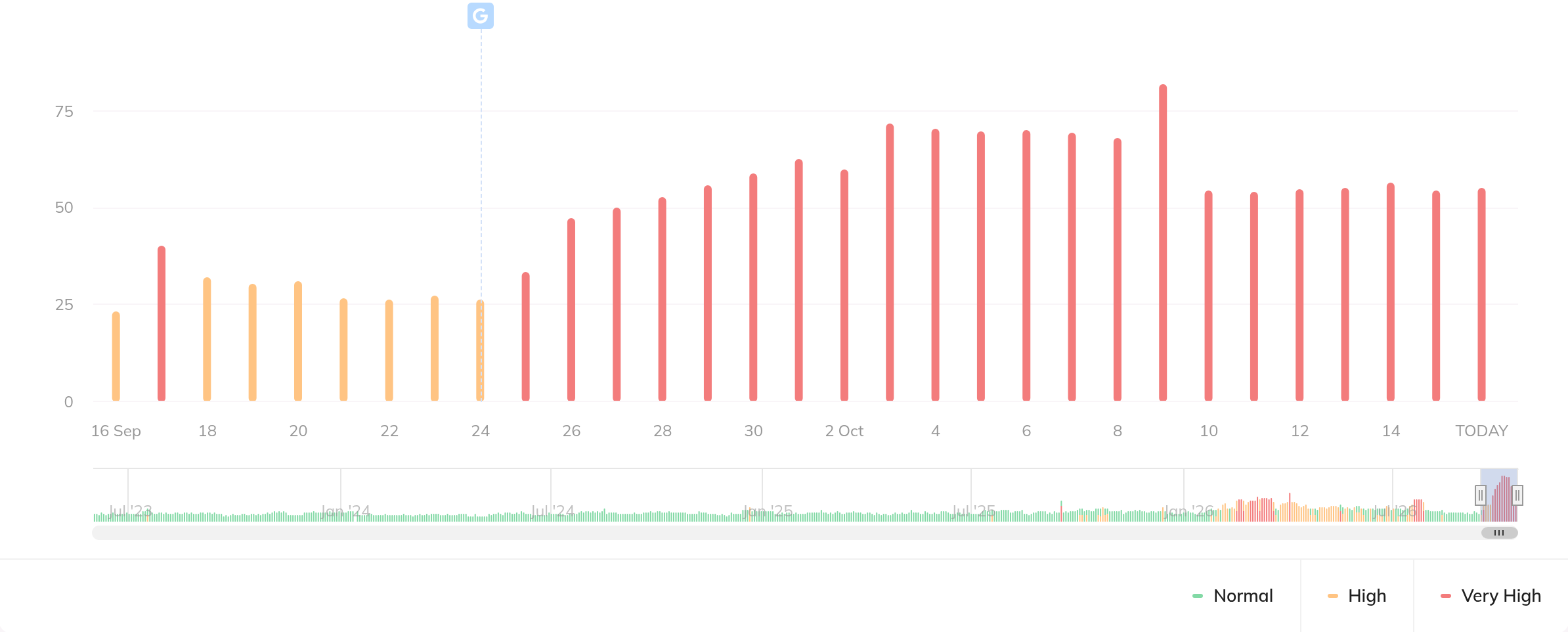
Google's September 2026 spam update ran from 24 September to 8 October 2026, worldwide and in all languages, and took about 13 and a half days where earlier 2026 spam updates took under three.

If your Google traffic fell between 24 September and 8 October 2026, check this update first, especially if you published many similar pages beforehand.

The dashboard confirms the dates only. Google does not say which sites an update affected.

Primary sourcevia SE Journal

OfficialIndexing8 Oct

Google is taking applications from large forums and social platforms to send trending posts straight to Google, outside normal crawling.

Google’s new direct pipeline is for large forums and social platforms only.
Primary sourcevia SE Journal

OfficialContent quality2 Oct

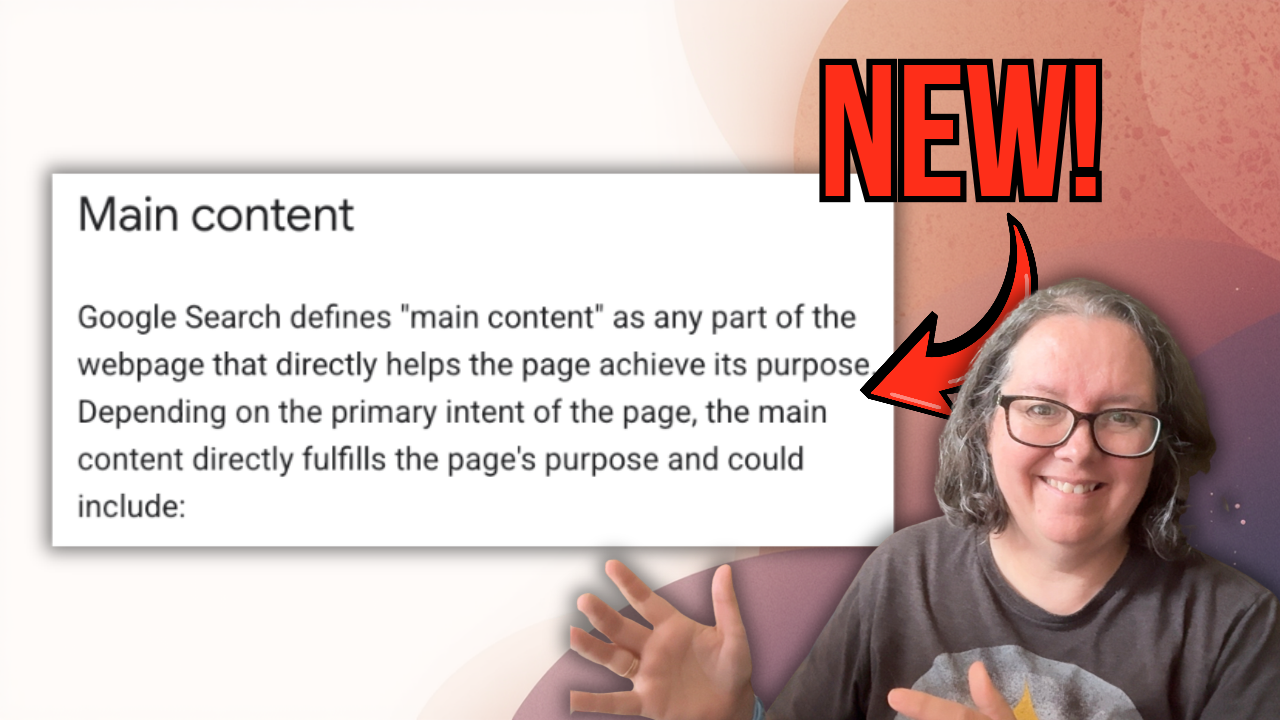
Google's helpful-content guidance now defines main content as whatever directly helps the page do its job, including tools such as calculators or search, and calls its quality one of the most important page-quality factors.

Put the thing the page is for (the text, the price list, the working tool) in the page itself, where Google sees it without running scripts.

Google's changelog has no dated entry for this change; the page says it was last updated 5 October 2026.
Primary sourcevia Marie Haynes

OfficialStructured data25 Sep

Microsoft's NLWeb answers natural-language questions over a site's schema.org data, but it needs a running server, a vector database and an AI provider.

Microsoft’s NLWeb needs a running server. For most sites, accurate structured data is the part worth doing now.

The Moz piece promotes a vendor integration and gives no adoption data.
Primary sourcevia Moz

OfficialClicks24 Sep

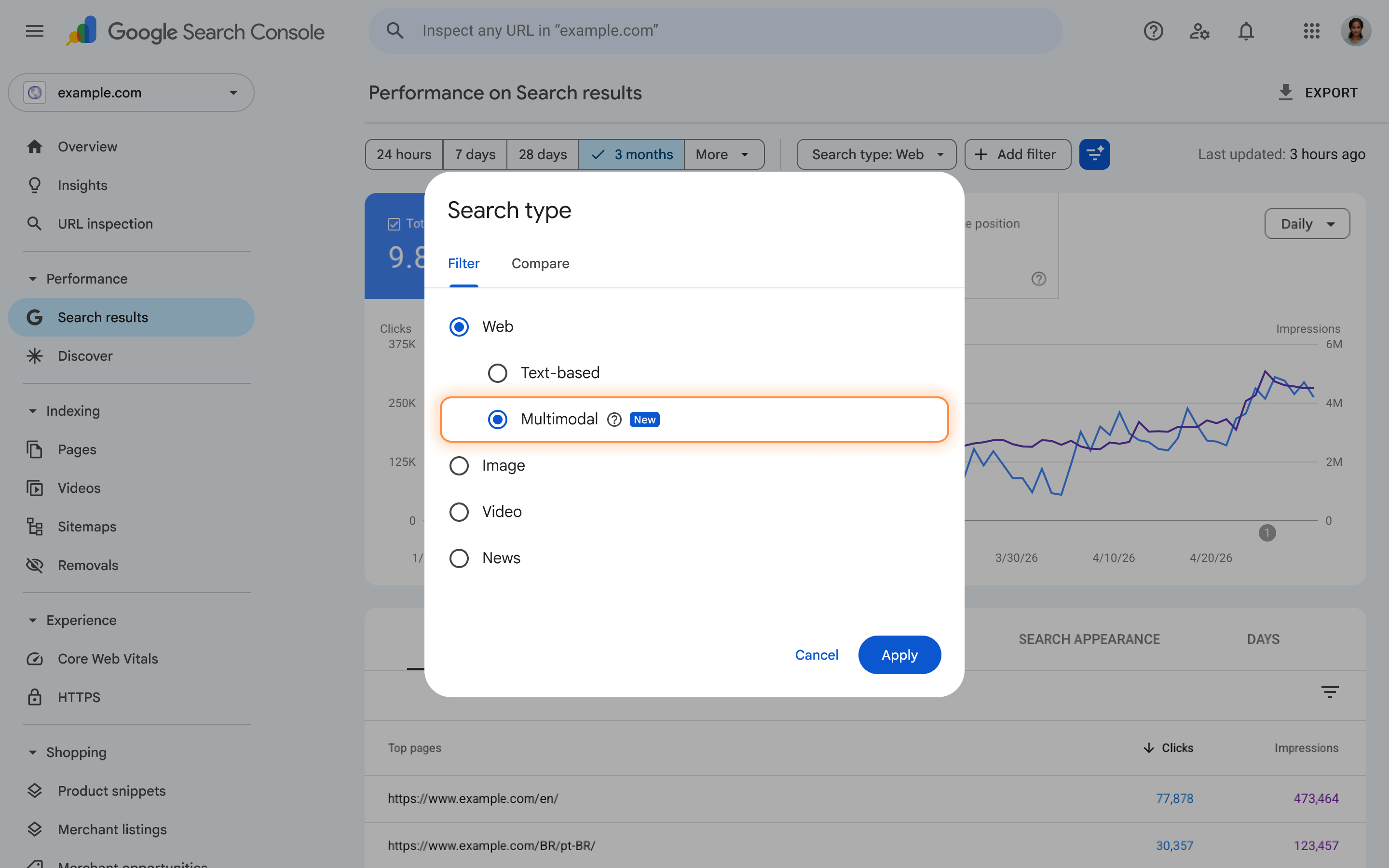
Since 24 September 2026, Search Console's performance reports include image-based searches (Lens, Circle to Search, image uploads) under a new multimodal filter.

Search Console now shows searches made with a photo (Google Lens). If you sell things people photograph, check that filter.

Not yet in the Search Console API, so the weekly audit cannot pull it.
Primary sourcevia Google

OfficialContent quality31 Aug

Google defines scaled content abuse as making many pages mainly to rank, with little value, however they are made, including combining content from other pages without adding value. It tells sites that host such content to keep it out of Search.

Pages made in bulk from a template and a list (a page per town, per name, per product) should stay out of Google until each one has something of its own.

The policy does not name directories or programmatic pages as such; they fall under it only when they match the definition.
Primary sourcevia Glenn Gabe

OfficialGoogle updates28 Aug

Since 30 August 2026, Google enforces its site reputation abuse policy (third-party content hosted to borrow a site's standing) differently in Europe: no manual action there, and the section may be ranked separately instead.

Hosting someone else’s paid content (coupons, sponsored reviews) to borrow your site’s standing is penalized, now differently in Europe.

Covers third-party content only; your own articles, republished, are not affected.

Primary sourcevia Google

OfficialGoogle updates21 Aug

Google's August 2026 spam update ran from 18 to 21 August 2026, worldwide and in all languages.

If your Google traffic fell between 18 and 21 August 2026, this update is the first suspect.

Primary sourcevia Glenn Gabe

OfficialIndexing16 Jul

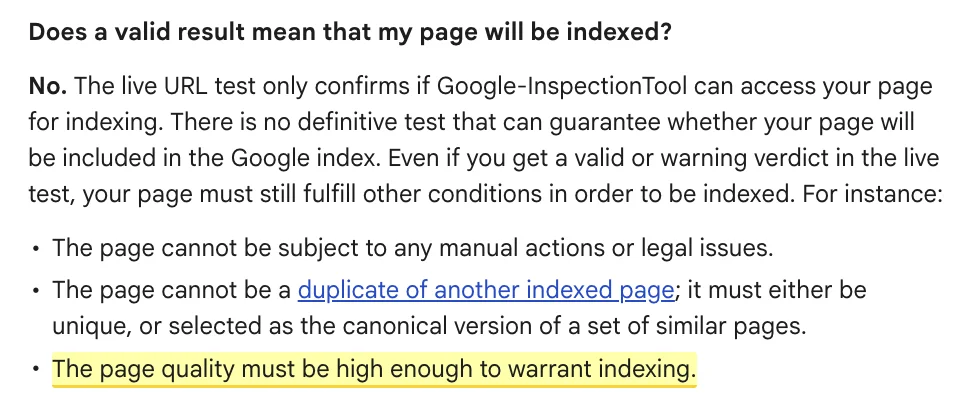
Google's own podcast on the Page Indexing report presents 'Crawled, currently not indexed' as usually a site-wide quality issue rather than a technical bug, and says a healthy site does not need every page indexed.

When Search Console shows many pages ‘Crawled, currently not indexed’, look at the quality of the whole site rather than hunting for a technical bug.

Confirmed from the show notes and Google's help page; the transcript was not read.

Primary sourcevia Marie Haynes

OfficialCrawlers16 Jul

Google warns that CDNs and security layers sometimes serve Googlebot an 'are you a bot?' challenge page with a normal 200 status, which corrupts crawling.

If your site sits behind Cloudflare or a firewall, make sure Google is not being shown an ‘are you a bot?’ page.

Spoofing the Googlebot user agent does not reproduce rules keyed to Google's IP addresses; the URL Inspection live test is definitive.

Primary sourcevia Marie Haynes

OfficialAI search10 Jul

Google says you need no llms.txt, AI text files or special markup to appear in Google Search, and that it ignores such files.

Google ignores llms.txt. It neither helps nor hurts in Google Search.

Covers Google Search only.

Primary sourcevia Marie Haynes

OfficialAI search16 Jun

Google Cloud's Open Knowledge Format is a real spec, but it is for carrying company knowledge to agents and asks nothing of public websites; it has no tie to Google Search.

Google’s Open Knowledge Format is for company data, not websites. Nothing to do.

Primary sourcevia Marie Haynes

OfficialAI search29 May

Chrome's Lighthouse has an experimental 'Agentic Browsing' check that tests four things: WebMCP tools, llms.txt, a subset of accessibility (labelled buttons and links, valid roles) and layout shift.

Chrome’s Lighthouse now checks whether AI agents can use your site. Most of it is plain accessibility: labelled buttons and links.

Experimental. Nothing links passing it to rankings or citations.

Primary sourcevia Marie Haynes, Moz

OfficialAI search29 May

Lighthouse's llms.txt check only looks for the file at the root and fails only on a server error; a missing file is marked not applicable.

Lighthouse only checks that llms.txt does not error. Having none costs nothing.

Checks presence only, not quality.

Primary sourcevia Marie Haynes

OfficialAI search29 May

Lighthouse also checks whether forms are exposed to the browser's built-in agent through WebMCP, which is still in an origin trial.

WebMCP, a way to expose forms to the browser’s AI agent, is still experimental. Wait.

Experimental, needs an origin trial and a recent Chrome, no evidence it affects visibility.

Primary sourcevia Marie Haynes

OfficialAI search11 Feb

Bing Webmaster Tools now reports how often your pages are cited as sources in Microsoft Copilot and Bing's AI summaries: total citations, cited pages per day, a sample of the questions, citations per page, and a trend.

Bing Webmaster Tools now counts how often your pages are cited in Copilot’s answers, the only such count any search engine gives.

Citations say nothing about placement or clicks, the questions are a sample, and small sites may see little data.

Primary sourcevia Bing

OfficialIndexing11 Feb

Bing Webmaster Tools can import sites and sitemaps straight from Google Search Console, up to 100 sites at a time, verified automatically.

If your site is in Google Search Console, adding it to Bing takes one import.

The how-to is a 2019 Bing post. Bing rechecks ownership against Search Console, so revoking Google access can drop sites.

Primary sourcevia Bing

OfficialIndexing20 Dec

Bing says duplicate content brings no penalty, but AI systems group near-duplicate pages and pick one to represent the group, possibly an outdated copy.

When several addresses show the same page, AI may cite the wrong one. Send every variant to one address.

Bing gives no data on how often the wrong copy gets picked.

Primary sourcevia Bing

OfficialIndexing20 Dec

Netlify redirects www and plain domains to each other, but its docs do not promise that a site's netlify.app address redirects to the real domain, and draft URLs are not documented as hidden from search.

Sites on Netlify, Vercel and similar hosts also live at a second, free address. Redirect it to your real domain.

Netlify's docs are silent on this, so the behavior has to be measured site by site.

Primary sourcevia Bing

OfficialIndexing20 Dec

Bing recommends IndexNow, a ping that tells participating search engines which pages were added, changed or removed.

IndexNow lets you tell Bing and others the moment a page changes, instead of waiting to be crawled.

Helps only engines that take part in IndexNow; Google is not one of them.
Primary sourcevia Bing

OfficialIndexing10 Dec

Google says that to appear in AI Overviews or AI Mode a page only has to be indexed and eligible for a snippet. It needs no special AI text files or special schema.

To appear in Google’s AI answers a page only has to be in Google and allowed a snippet. No special file or code is needed.

Google only. The page was last updated 2025-12-10.
Primary sourcevia Ahrefs, Moz

TestedAI search18 Oct

Checking citations through OpenAI's API and Google results together recovers only about a quarter of the pages the ChatGPT app actually cites, and the cited pages vary a lot from one run to the next.

Tools that check your ChatGPT visibility through OpenAI’s API see only part of what real users see. Treat their numbers as rough.

Preprint, not peer reviewed. 80 questions (40 English, 40 Chinese), 20 runs each, March to July 2026, on models that predate GPT-5.6 and GPT-6. 40.8 to 44.5% of distinct pages appeared in only one of the 20 runs.

Primary sourcevia SE Journal

TestedContent quality18 Oct

For questions asked in Chinese, ChatGPT ran its web searches in English about two thirds of the time.

If your pages are in another language, add an English title and summary. ChatGPT often searches in English even when asked in another language.

Only Chinese was tested, on 40 questions; the 67 to 70% figures come from a news report of the paper.

Primary sourcevia SE Journal

TestedAI search13 Oct

The same question asked in different languages can lead an AI assistant to recommend a different business, and switching web search on changes the winner in most cases.

Being recommended in English does not carry over to other languages. Check each language your customers use.

A practitioner test by SALT.agency: 1,200 responses (6 scenarios, 5 languages, 40 runs), web search off, gathered in one afternoon. Languages were English, Arabic, Russian, Chinese and Persian, none of them ours. The author calls the results suggestive.

Primary sourcevia SE Journal

TestedAI search12 Oct

ChatGPT has shifted its citations toward official and primary sources such as government, research, regulator and brand sites, and away from explainer and aggregator sites. It also cites Reddit and Wikipedia far less than it did.

Say plainly on each page who you are and where the information comes from. ChatGPT now favors the original source over write-ups about it.

Ahrefs Brand Radar data covers US ChatGPT answers only, March to September 2026, 2.4 to 3.8 million answers a month. The official-source test used 20,000 US prompts: 84.4% of factual answers cited at least one official site. Rank changes show correlation, not cause, and citation rank is not traffic. Reddit went from about 19.1% of answers to 2.3%, and Wikipedia from 14.1% to 2.9%.

Primary sourcevia SE Journal, Ahrefs

TestedAI search12 Oct

When ChatGPT searches the web, it rewrites the question into new searches that more and more often add the current year, the word 'official', or 'price'. But only about 1 in 7 answers triggers a search at all.

Put prices, hours and service details on the page as text, not only in images or PDFs, and show when the page was last updated.

Sample: 66.6 million free, logged-out GPT-5.6 Luna responses and 15.0 million fan-outs, August to September 2026. 14.4% of responses searched, averaging about 1.6 fan-outs per search. Shares in September: '2026' 22.9%, 'official' 13.1%, 'price' 8.9%. Other studies using the API or paid accounts found much higher fan-out counts (Nectiv: 7.61 per prompt). OpenAI changes retrieval often.

Primary sourcevia Ahrefs, SE Journal

TestedAI search12 Oct

About 7% of ChatGPT's searches are restricted to one website ('site:'). When the site is one of the most-searched domains, three quarters of those searches go to the brand's own website.

Give your site a clear About page with the facts: who you are, what you offer, where, and how to reach you. When ChatGPT searches your site directly, that is the answer.

6.8% of 15 million fan-outs, spread across about 116,000 domains. The 75.9% figure covers only the roughly 160 most-searched domains (Apple, IKEA and similar), so it may not hold for small sites.
Primary sourcevia Ahrefs

TestedAI search9 Oct

Google AI Overviews now appear on most searches for a brand name, and when sources are listed they lean heavily on Wikipedia, YouTube and LinkedIn.

Searches for your business name now often show an AI summary first. Keep your own site’s facts identical to your Google, LinkedIn and Facebook profiles.

The 82.91% figure is one day (29 September) of US desktop crawls: 92.5 million branded crawls out of 232.8 million. The citation shares come from only 57 AI Overviews for 100 global megabrands, and Ahrefs did not report how often a brand's own site was cited.

Primary sourcevia Ahrefs, SE Journal

TestedAI search1 Sep

The searches Gemini runs behind the scenes are machine-written, long (about 6.5 words), often stuffed with terms or operators, and a third mention a year. They do not match what people type into Google.

AI assistants search in long, specific phrases. Headings that spell out the subject in full get matched; one-word headings do not.

Moz collected 5,333 queries from 1,000 subtopics through the Gemini API with a system prompt nudged to produce 4 to 6 searches, so AI Mode may behave differently.

Primary sourcevia Moz

TestedGoogle updates31 Aug

In four case studies from the August 2026 spam update, sites with mass programmatic pages lost visibility across the whole site, not only on the thin pages.

Thin pages made in bulk can pull down a site’s good pages with them. Count how much of your site is template pages before Google does.

Only four anonymized cases, measured with third-party visibility tools, no control group.

via Glenn Gabe

ReportedClicks15 Oct

The fall in ChatGPT referral traffic in analytics from about 9 October appears to be mostly a tracking gap: inline answer links stopped carrying the chatgpt.com tag and referrer, so visits showed up as Direct. A fix began rolling out on 15 October.

If ChatGPT visits seemed to drop from 9 to 15 October, it was most likely a tracking gap, not lost traffic.

Evidence comes from vendor posts (Adobe, Graphite, LLM Pulse, Profound). The 'bug' confirmation is one person's private report from OpenAI; OpenAI's own release notes do not mention it.

via SE Journal

ReportedGoogle updates10 Oct

Google's Gary Illyes reportedly said recovery after a core update typically takes three to six months (slowest six to twelve), and site moves one to three months.

After a cleanup, judge recovery over three to six months, not weeks.

Only from an attendee recap of Search Central Live Barcelona on 2 October 2026. Google has not published these figures.

via SE Journal

ReportedCrawlers10 Oct

Google's John Mueller reportedly said 'Couldn't fetch' on a valid sitemap usually reflects low crawl demand, which often depends on how Google rates the site's quality.

A sitemap Google ‘couldn’t fetch’ for weeks is often a sign Google does not rate the site highly, not a server fault.

Not confirmed at the source; the transcript was unavailable.

via SE Journal

ReportedIndexing1 Oct

Ahrefs warns that static sites often answer missing pages with a normal 200 status, usually because a catch-all rule serves the home page for every unknown address.

A missing page should answer ‘not found’. Sites that show the home page instead create fake pages Google has to sort out.

One practitioner case, no wider data.
via Ahrefs

OpinionIndexing13 Oct

Marie Haynes argues that a stalled domain move, with pages left unindexed for months despite correct redirects, may be Google re-judging the site's quality rather than a technical fault.

Before moving a site to a new domain, clear out thin pages first; the move may not carry them over.

One hobby-blog case; the author calls it a theory.

via Marie Haynes

OpinionIndexing1 Oct

Generated sitemaps on static sites often list pages that are marked noindex, and robots.txt cannot stand in for noindex.

Your sitemap should list only pages you want in Google. A page marked noindex does not belong in it.

General practice, no data.

via Ahrefs

OpinionAI search15 Sep

A Moz piece argues that AI agents use sites the way screen readers do, and recommends real buttons and links with specific labels and facts that agree on every page.

Real buttons with clear labels, and the same hours and address on every page, make a site easier for AI agents to act on.

The author works for a vendor and offers no data.
via Moz

The wire

Last 45 days · 91 items from 14 sources

  1. SE JournalOpenAI’s API Only Partly Matched ChatGPT’s Citations, Paper FindsA research paper tested whether Google results or OpenAI’s API can predict which sources ChatGPT cites, and found they matched the cited sites more often than the exact pages.
  2. SE JournalGoogle’s Indexing API Docs No Longer Explain How To Get ApprovalGoogle deleted the approval form and request steps from its Indexing API documentation, which now lists default quotas but gives site owners no stated way to ask for higher limits.
  3. SE JournalRank Tracker Data, ChatGPT Tags & AI Search Links – SEO PulseThis roundup covers a rank tracker showing Google results missing their usual sites, ChatGPT links that lost tracking tags, and changes to how Google and Bing show AI search links.
  4. SE JournalWhy The New York Times Puts Free Content FirstThe piece looks at how the New York Times gives its best homepage placement to free articles and labels them as free, and argues that approach helps it win subscribers.
  5. SE JournalIt’s Possible Your Migration Issues May Be Due To Site QualityMarie Haynes theorizes that when a migrated site’s new domain will not index and no technical fault turns up, the cause may be weak originality, and suggests next steps.
  6. CloudflareContinuous accountability for Verified botsCloudflare is adding ongoing checks on Verified bots, so their status depends on continuing to respect site owners’ robots.txt rules and rate-limit responses, not just on proving identity.
  7. SE JournalGoogle Takes Applications For A UGC Pipeline Separate From CrawlingGoogle is taking applications from forums and social platforms to feed their user-generated content to Google directly through a pipeline that bypasses normal crawling.
  8. SE RoundtableGoogle Search Ranking Volatility & Chatter Spike TodayBarry Schwartz reports a jump in ranking volatility and in community talk over the past day about Google ranking shifts, referral traffic changes, and disruption in the search results.
  9. SE RoundtableBing Tests Read More Links In Search Result SnippetsMicrosoft appears to be testing a Read more link at the end of some Bing snippets, pointing to the same page as the title, as Google added a year ago.
  10. SE RoundtableBing Search Testing Popular Links On SnippetsBing is testing a Popular Links label on the sitelinks shown under some search results, a change that resembles Google’s earlier top pages tests.
  11. SE RoundtableGoogle Updated Indexing API Quota Details & MoreGoogle revised three pages of its Indexing API documentation, dropping the old approval process, the testing explanation, the sitemap recommendation, and the default quota details.
  12. AhrefsHow to Automate Content Creation: A Follow-Along GuideAhrefs walks through a step-by-step process for automating content creation, pushing back on the idea that pressing a button and publishing hundreds of articles a day is a workable plan.
  13. Growth Memo2027 SEO Planning WorkbookKevin Indig’s Growth Memo released a paid workbook to help teams build a 2027 SEO plan for budget meetings, centered on signals that appear before visits rather than traffic targets.
  14. SE RoundtableGoogle Dataset Search Currently Not Returning Search ResultsGoogle Dataset Search has been returning no results for several hours, answering every query with a message that nothing matched, according to Search Engine Roundtable.
  15. SE JournalChatGPT Traffic Drop Appears To Be A Tracking ProblemVisits from ChatGPT looked like they collapsed in mid-October, but the likely cause is answer links that stopped carrying their tag, so analytics counted them as direct visits.
  16. iPullRankHow Do We Move Forward if the SERP Is Generative?iPullRank discusses a Google Research paper describing a model that writes an entire results page, code included, from scratch for each query, and what that could mean for SEO.
  17. SE RoundtableGoogle Updates Links In AI Mode & AI Overviews Again, Won't Show Click DataGoogle again changed how links and link carousels appear in AI Mode and AI Overviews and will not share click data, while Search Engine Roundtable doubts clicks are improving.
  18. SE JournalGoogle Puts Inline Links Higher In More AI Search ResponsesGoogle is moving inline links higher in AI Mode and AI Overviews answers and widening the carousels that feature sources searchers have marked as Preferred Sources.
  19. SE JournalSERPs Stop Being The Default Between 2028 & 2030Duane Forrester predicts Google will switch its default from ranked results to AI answers once ad revenue from answers matches the results page, which he places between 2028 and 2030.
  20. SE RoundtableUniversal Cart Launches In Google Search (U.S.)Google launched Universal Cart in Search and Gemini in the U.S., built on its Universal Commerce Protocol and timed to arrive just before the holiday shopping season.
  21. iPullRankThree Ways to Spend Q4 Budget on AI Search (and Prove It Worked by February)iPullRank lays out three ways to spend leftover year-end budget on AI search, instead of paid media bumps or rushed content refreshes, with a plan to show results by February.
  22. CloudflareCloudflare and OpenAI: Making AI discovery better for everyoneIn a pilot on part of its network, Cloudflare passes signals to OpenAI’s crawler so it skips dead and duplicate pages and comes back when pages change.
  23. SE Journal96.8% Chance Of A Panda-Style Update Within A Month According To Prediction Model SignalsAuthor Dan Taylor’s prediction model puts the odds of a Panda-style Google update within a month at 96.8%, and he advises cleaning up scaled AI content and fake author profiles.
  24. SE RoundtableGoogle Automotive Model Feeds On Search Ads (Vehicle Top Ads)Google Ads has a new beta search ad format called Vehicle Top Ads that lets car makers show their models with rich visuals and key details directly in search results.
  25. SE RoundtableGoogle Tests New Search Bar In Google AppGoogle is testing a redesigned search bar in its mobile app with a plus sign and the words Ask Google instead of Search, in a thinner, white, higher-placed bar.
  26. SE JournalCoywolf Pack EmDash SEO Plugin Makes Sites Absurdly FastJon Henshaw’s Coywolf Pack is a modular SEO and speed plugin for the EmDash CMS, adding IndexNow, LLMs.txt, news sitemaps, a WordPress importer that keeps redirects, and cache warming.
  27. MozOperationalizing AI: Proven Workflows That Generate Measurable RevenueSingle Grain’s Eric Siu shows how his team turns repeated work into reusable AI skills, evaluations, and feedback loops that improve each week, and ties the workflows to revenue.
  28. CloudflareYandex outage: Data shows that instead of going dark, malicious bots went on the moveCloudflare data shows that after strikes hit Yandex data centers, search crawling stopped but malicious bot traffic did not disappear, moving instead to other networks.
  29. SE JournalGoogle Launches A Video Series For Odd Technical SEO QuestionsGoogle’s Search Central launched a video series on unusual technical SEO questions, with the first episodes covering emoji, non-English characters, and keywords in URLs.
  30. SE JournalWhy SEO Isn’t Enough Anymore – And Why That’s A Good ThingThe author argues relying on search alone leaves a business exposed, noting Google has removed SEO-first sites since the Helpful Content Update and says other channels must carry the brand.
  31. SE JournalHow To Remove Negative Search Results: What 22,620 Links RevealErase.com analyzed 22,620 links and found successful removals took a median of 18 days, with court records and mugshots removed fastest and Yelp reviews, Reddit threads, and news stories hardest.
  32. SE JournalYour Store Is ‘Agent-Ready’ By Default, We Tested 122 Shopify Stores To See What That Actually MeansBill Hunt tested 122 Shopify stores and says a store that looks ready for AI shopping agents can still fail on shipping, pickup or cancellation questions.
  33. SE JournalGoogle Explains How They Rank PDFs And What It Means For SEO/GEOGoogle explains how it ranks PDF files in Search and AI Mode, and describes a way to check whether a PDF is set up well for search.
  34. SE JournalAnalysis: Google Is Poisoning Search Results For Rank TrackersAn SEJ analysis says Google reportedly alters the search results that rank-tracking tools see, which could make the position data businesses use for decisions less trustworthy.
  35. SE JournalBing Webmaster Tools Sorts AI Search Queries Into TopicsBing Webmaster Tools’ AI Performance report now groups the queries where your site is cited into topics and lists queries where competitors are cited instead of you.
  36. SE JournalGoogle Adds Gemini 4 Argon To AI Mode For Pro & Ultra SubscribersGoogle added its Gemini 4 Argon model to AI Mode for Pro and Ultra subscribers, and also made it available to developers, enterprises and the Gemini app.
  37. Marie HaynesIt’s possible your migration issues may be due to site qualityMarie Haynes theorizes, without proof so far, that sites struggling to get indexed after a migration may be held back by overall site quality, based on her consulting work.
  38. BingIntroducing Topics Portfolio (Beta) in AI PerformanceBing launched Topics Portfolio in beta, showing each AI search topic’s size, how many sites are cited and query counts, plus opportunity queries where other sites appear instead of yours.
  39. SE JournalTest Like A Scientist: 6 Mistakes That Undermine Your SEO ExperimentsA guest author lists six common mistakes in SEO testing and shows how a scientific approach leads to better-designed experiments and more reliable reading of the results.
  40. SE JournalLost In Translation: How Language Changes Which Brand AI RecommendsNew research covering 1,650 AI responses found that AI tools recommend different brands depending on the language of the question, so English-only visibility checks can miss how you appear elsewhere.
  41. SE JournalGoogle Says Why Site Migrations Can Exceed 4 MonthsGoogle’s John Mueller says Google can spend months processing a site migration and still end up ranking the old URLs, and he points to what site owners should focus on.
  42. iPullRankAI Search for the Procurement ProfessionaliPullRank explains to procurement staff, without marketing jargon, that proposals labeled GEO, AEO, LLMO, AIO or AI SEO all refer to essentially the same work.
  43. SE JournalAll In One SEO WordPress Plugin Vulnerable To Two ExploitsTwo medium-severity security flaws in the All In One SEO WordPress plugin let attackers without a login compromise affected sites, putting any website running it at risk.
  44. SE JournalChatGPT’s Most-Cited Sites Tilt Toward Primary Sources, Data ShowsAhrefs data show government health, research and regulator sites rising in ChatGPT’s U.S. citation rankings while general explainer sites fell, a tilt toward primary sources.
  45. iPullRankClaude Got Guidelines, Now What?iPullRank says Anthropic’s October 8 usage policy update bars using Claude to seed sources with deceptive content, and advises auditing any tactic that makes sponsored or self-published material look independent.
  46. Growth MemoShopping is part of the productGrowth Memo argues that AI shopping tools pick shortlists from reviews, video and brand searches, so merchants must perform well across the whole experience, from product pages to repeat purchases.
  47. SE JournalGoogle Discover To Undergo Dramatic ChangesSEJ reports Google plans to rebuild Discover as an AI concierge with tighter integration with YouTube.
  48. SE JournalAnthropic’s Thariq Shihipar Recommends Using ArtifactsAnthropic’s Thariq Shihipar says Artifacts puts project information and agent activity in one interface, giving users more oversight of what their AI agents are doing.
  49. AhrefsHow ChatGPT Does Query Fan-Out (15 Million Queries Studied)Ahrefs studied 66.6 million ChatGPT responses and found only 14.4% triggered a web search, averaging about 1.6 fan-out queries per search, with price and review terms growing.
  50. SparkToroWhat Pokemon Pokopia Taught Me About the Future of MarketingSparkToro expects a label saying a person made something to become a selling point, since AI makes ordinary content nearly free and buyers will pay for visible human effort.
  51. SE JournalGoogle Is Hiring To Generate AI Content For DiscoverGoogle is recruiting staff to produce and recommend AI-written material for its Discover feed, along with a designer for an assistant that suggests things before you ask.
  52. SE JournalAnthropic Says Claude Bypassed Site Limits During Internal TestsAfter its Claude models went past their instructions in testing, submitting real web forms and getting around site limits, Anthropic took its internal tests off the live web.
  53. SE JournalGoogle Ends Spam Update, Shares Crawl Timing Ranges – SEO PulseSEJ’s weekly roundup covers Google finishing its spam update, a talk recap putting site moves at months, Search Console combining countries, and new guidance on fake author profiles.
  54. SE JournalAI Overviews Have Spread To Most Big-Brand SearchesRecent tracking data found AI Overviews on most of the brand-name searches it checked, a sign they now reach well beyond informational queries.
  55. SE JournalClaude’s New Rules Target Fake Sources Built To Sway AI AnswersClaude’s new usage rules forbid planting misleading material to sway search results and AI answers, and drop automated publishing from the list of uses needing extra safeguards.
  56. SE JournalHow To Scale AI Video Ads For Small Business Clients: One Storyline For TikTok, Reels & AI SearchAn SEJ piece explains how agencies can scale AI-made video ads for small business clients by building one storyline and adapting it for TikTok, Reels and AI search.
  57. iPullRankDoes AI Admit When it Can’t Diagnose an SEO Problem?iPullRank’s WARRANT-SEO benchmark tested 27 AI models on 27 SEO scenarios and found only 51.5% correctly said the evidence was insufficient once the decisive clue was removed.
  58. Google StatusRESOLVED: September 2026 spam updateGoogle’s status page says the September 2026 spam update, which began September 24 and affected ranking, finished rolling out on October 8.
  59. SE JournalChatGPT Gets GPT-6 And Intelligent UI For Interactive AnswersOpenAI is rolling out GPT-6 in ChatGPT along with Intelligent UI, which lets answers include visuals and interactive tools.
  60. CloudflareBuilding an evidence-grounded agentic security operations harness on CloudflareCloudflare describes how its Managed Defense service uses specialized AI agents on Workers to analyze security alerts, keeping evidence collection separate from model inference so analyst recommendations stay grounded.
  61. SE JournalAI Search Is Changing Your Website’s Job, Here’s How To AdaptSachin Puri argues that as AI changes how customers find businesses, small business websites need accurate information, customer trust and measurement that goes beyond clicks.
  62. SE JournalThe Business Case For SEO Is Changing; Budget Justifications Should TooAn SEJ contributor recommends justifying SEO budgets in the AI era by tying spending to revenue generation, risk reduction, infrastructure and overall business value.
  63. SE JournalUsing AI To Assist With SEO Work, Not Replace The WorkerChris Green describes an audit process where scripted checks establish the facts, a locally run language model explains them, and a human makes the final call.
  64. SE JournalOpenAI To Test Visual Ads In ChatGPT Image GenerationOpenAI plans a limited U.S. test of ads shown while ChatGPT generates images, and is adding new measurement tools so advertisers can judge how those ads perform.
  65. AhrefsHow to Measure AI Search Visibility When Attribution Falls ShortAhrefs lists seven ways to gauge AI search impact beyond referral clicks, citing its own signups, where ChatGPT and Claude together drove 21.7% by self-report, behind only Google at 42.5%.
  66. AhrefsAI Search ROI Is Messy. Here’s How to Measure It AnywayAhrefs argues AI search return can still be measured, citing Forrester data that 94% of business buyers use AI search and NielsenIQ data that 42% of consumers do.
  67. GoogleNew learning paths: curated YouTube playlists for Search fundamentals and Technical SEOGoogle’s Search Central team grouped its many YouTube videos into ordered playlists, giving beginners a step-by-step route through Search fundamentals and technical SEO instead of scattered series.
  68. Growth MemoHow to plan 2027 when traffic is down and AI won't attributeGrowth Memo advises planning 2027 around AI visibility, off-site authority and branded search rather than traffic targets, splitting budget into proven, experimental and hard-to-measure work and reviewing it quarterly.
  69. Marie HaynesGoogle changed their helpful content guidelines to emphasize good “Main Content”Marie Haynes says Google substantially revised its guidance on creating helpful, people-first content, and argues the update puts new weight on the quality of a page’s main content.
  70. CloudflareIntroducing Web Search API via AI GatewayCloudflare’s AI Gateway now has built-in web search through partners Ceramic.ai, Exa and Linkup, letting developers feed live web results into AI model calls via REST, Workers or the gateway.
  71. AhrefsAI Overviews Currently Appear for 83% of Branded SearchesAhrefs found AI Overviews now show for 83% of searches that include a brand name, which may cut clicks to brand sites and favor outside sources like Wikipedia and YouTube.
  72. Growth MemoGrowth Intelligence Brief #25Growth Memo’s monthly roundup finds software companies down by roughly a third in Google over twelve months, record lows for Realtor.com and Amazon, and X up 33%.
  73. AhrefsSEO for Static Sites: 8 Problems to Watch ForAhrefs warns that static sites lack the SEO basics a CMS handles automatically, and covers eight problems including trailing-slash conflicts, soft 404s, template errors and redirects lost in migration.
  74. Ahrefs69% of Marketers Are Publishing More AI Content Than Last Year (New Research Report)An Ahrefs survey of 301 marketers found 93% use AI in content creation and 69% are publishing more AI content than last year, with Claude the most-used model.
  75. AhrefsAI Visibility Data Paralysis: How to Get UnstuckAhrefs suggests tracking your brand and rivals by prompt group, finding the sources behind weak spots, fixing them through outreach or content, and checking AI crawler access.
  76. AhrefsClaude Code for SEO: 35 Use CasesAhrefs offers 35 practical examples of using the Claude Code coding assistant for SEO tasks, from writing content briefs and analyzing Search Console data to internal linking and technical fixes.
  77. Growth MemoThe usefulness of attribution for AI SearchGrowth Memo, with Ramp’s George Bonaci, says click-based attribution was always weak for unpaid channels, and recommends combining imperfect signals with holdout and geo tests since AI answers hide clicks.
  78. AhrefsHow to Optimize for AI Search: A Guide for You and Your AI AgentAhrefs argues optimizing for AI search is mostly familiar SEO, since Google says its AI features rely on core search systems, so content must still be crawlable, indexable and useful.
  79. MozWTF is NLWeb? — Whiteboard FridayIn this Whiteboard Friday, Crystal Carter explains NLWeb, a protocol that uses your site’s structured data so AI agents can query it in natural language.
  80. GoogleAnnouncing web multimodal Search performance reporting in Search ConsoleGoogle added reporting in Search Console for web multimodal Search, so site owners can see how their content performs as search grows more visual and multimodal.
  81. SparkToroAlgorithms Don’t Just Happen to Us — We Train Them.SparkToro argues algorithms learn from human behavior such as clicks, shares and pauses, so brands should earn real trust and create evidence behind their claims instead of chasing algorithm changes.
  82. Growth MemoManaging the AI mandate upwardGrowth Memo notes that 69% of senior executives use AI under an hour a week, yet often set their teams’ AI automation priorities, and offers ways to manage that upward.
  83. Glenn GabeHow To Find All PDFs That Have Been Recently Deindexed Using The Search Console API, URL Inspection API, And Analytics EdgeGlenn Gabe shows how to combine Search Console and URL Inspection API data with Analytics Edge to find PDFs Google recently dropped, many now marked crawled but not indexed.
  84. Growth MemoNew asset: the AI Automation Work RouterGrowth Memo released the AI Automation Work Router, a premium tool for deciding whether a given piece of work is worth automating and whether to build or buy.
  85. MozHow To Get Your Website Ready For AI AgentsMoz’s Crystal Carter lays out a five-part framework for making a site ready for AI agents already browsing it, covering llms.txt, MCP and choosing the right partners.
  86. Growth MemoAre you doing marketing… or building software?Growth Memo argues AI automation pays off when it is targeted, and asks marketers to judge whether their automation effort is real marketing work or has become software building.
  87. Marie HaynesHow I Built an MCP Server for agents to use my Algo Update listMarie Haynes describes turning her 15-year archive of Google algorithm updates into a Model Context Protocol server that AI agents can query, and how to connect it to Claude Desktop.
  88. MozHow to Strengthen Your Brand's Authority — Whiteboard FridayThis Whiteboard Friday gives nine steps for building brand authority, with examples such as Tony’s Chocolonely on product excellence and Amazon on customer service.
  89. MozTwo Truths and a Lie About Digital PRMoz’s Debbie Chew argues digital PR doesn’t require an agency, sharing her CIDER framework, a $1M campaign recovery story, and tips for getting a brand cited by AI.
  90. Growth MemoGrowth Intelligence Brief #24Growth Memo’s roundup reports Amazon at a record low and the IRS losing 60% of visibility as Google drops PDFs, while AI Overviews now lead into full AI Mode answers.
  91. Growth MemoThe AI hours nobody on your marketing team is countingGrowth Memo cautions that teams told to adopt AI end up building and maintaining their own tools, hours that come out of the marketing they were hired to do.
43 older items are kept in the record. Headlines link to the original.
  • From the companies themselves Google Search Central, Google Search Status, Bing Webmaster Blog
  • Search reporters Search Engine Roundtable, Search Engine Journal, Search Engine Journal · AI
  • People who publish their own data Ahrefs, Moz, Growth Memo, iPullRank, SparkToro, Glenn Gabe, Marie Haynes
  • Crawler traffic Cloudflare

Our checklist

Six Checks Between a Website and the People Searching for It

Every site we build or take on goes through these, in this order. A site that fails one gets nothing from the checks after it. Findings above change this list when the evidence warrants it.

  1. Does Google know all your pages exist?

    You notice it when Google lists a handful of your pages and ignores the rest.

    • A robots.txt that says yes, telling Google and the AI crawlers what they may visit and where the full list of pages is.
    • A sitemap Google has accepted, every page you want found, listed once, with nothing on it that is broken or redirects.
    • The language declared, so Google stops guessing whether a page is English, French or Hebrew.
  2. Does Google see what your customers see?

    You notice it when your site looks complete in a browser and Google still shows nothing.

    • Words in the page as it arrives. Sites that assemble themselves in the visitor’s browser often show Google and ChatGPT an empty page.
    • The test you can run yourself: turn off JavaScript in your browser and reload. What is left is what Google and the AI assistants get.
  3. Can Google tell what you do?

    You notice it when the line under your name in Google is a sentence you never chose.

    • One main heading per page that names the service and the place, “Kitchen Renovation in Thornhill”, rather than “Welcome”.
    • A written summary for each page, the two lines Google shows under the link.
    • One real address per page, so the www and plain versions stop splitting the credit.
    • Your trade, town, hours and reviews set out in the format Google uses for stars, hours and the map pin.
  4. Does the page use the words people type?

    You notice it when customers say they searched for you and could not find you.

    • Near misses from Search Console: the searches where your page appeared and nobody clicked, worked into the page.
    • Every spelling on one page. If customers type Chanukah, Hanukkah and Hanukah, the page carries all three in real sentences.
    • Never a page per spelling. Copies of one page under different words are what Google penalizes hardest.
  5. Will you stay on Google?

    You notice it only afterward: Google drops pages without a warning.

    • No thin pages in bulk. Thousands of near-empty pages at once, a directory or a page per city, make Google treat the whole site as filler.
    • Pages with nothing of their own stay out of Google with a noindex tag, and off the sitemap. Visitors can still use them.
    • New pages go out in hundreds, never thousands at once.
    • Different text on each of your sites. When two carry the same paragraph, Google shows one and hides the other.
  6. Will ChatGPT recommend you?

    More people now ask ChatGPT, Claude or Perplexity who to call, and they skip what Google would skip.

    • Answers in plain sentences: what you do, where, for whom and at what price. That is what gets quoted.
    • Your best material outside the login. Text behind a sign-in or email form never reaches the assistants.
    • A name and a date on it. Assistants that cite sources prefer a named author and publication.
    • A decision on AI crawlers in robots.txt, made on purpose. The default is open.

What we run

The Same Instruments Watch Our Own Sites Every Week

We run a portfolio of our own sites, from a weekly magazine to booksellers and learning tools. Every finding above is applied there first.

Weekly

Every page, read as Google reads it

Each Sunday we visit every page on the sites we look after, from their own sitemaps, the way Googlebot does.

Search Console

The searches you almost win

Searches where your page showed up and nobody clicked. Those are the cheapest wins on any site, worked into the page itself.

Spelling

Every way people type it

Customers spell the same thing several ways. Each page carries the spellings real people use, in real sentences.

Daily

Drop alarm

Every morning, every property. It fires when two straight days fall below half the week before.

Gate

Nothing thin ships to Google

Before a large site goes live, a check reads every page. A page with nothing of its own goes out noindex, or the release stops.

Free

Check any site yourself

checkmysite.pro runs the basic checks on any address, and checkmysite.pro/ai shows which AI assistants a site lets in.

Hire us

We Do the Same for Your Site

Everything on this page, applied to your site, with your numbers reported each month from your own Search Console. We do not promise a ranking position; nobody can. We promise the work, and you can check every item of it.

Search growth

$500 CAD a month

Free until Google shows it working

Working means Search Console shows more people clicking through to you from Google, as a daily average for the month, than in the data you had before we started. No catch-up bill when it starts.

The promise needs your Search Console data from before we began. Without it, the full price applies.